
Lates News From Refrigerant Gas Wholesale
How Do Crop Spraying Drones Work?
Apr
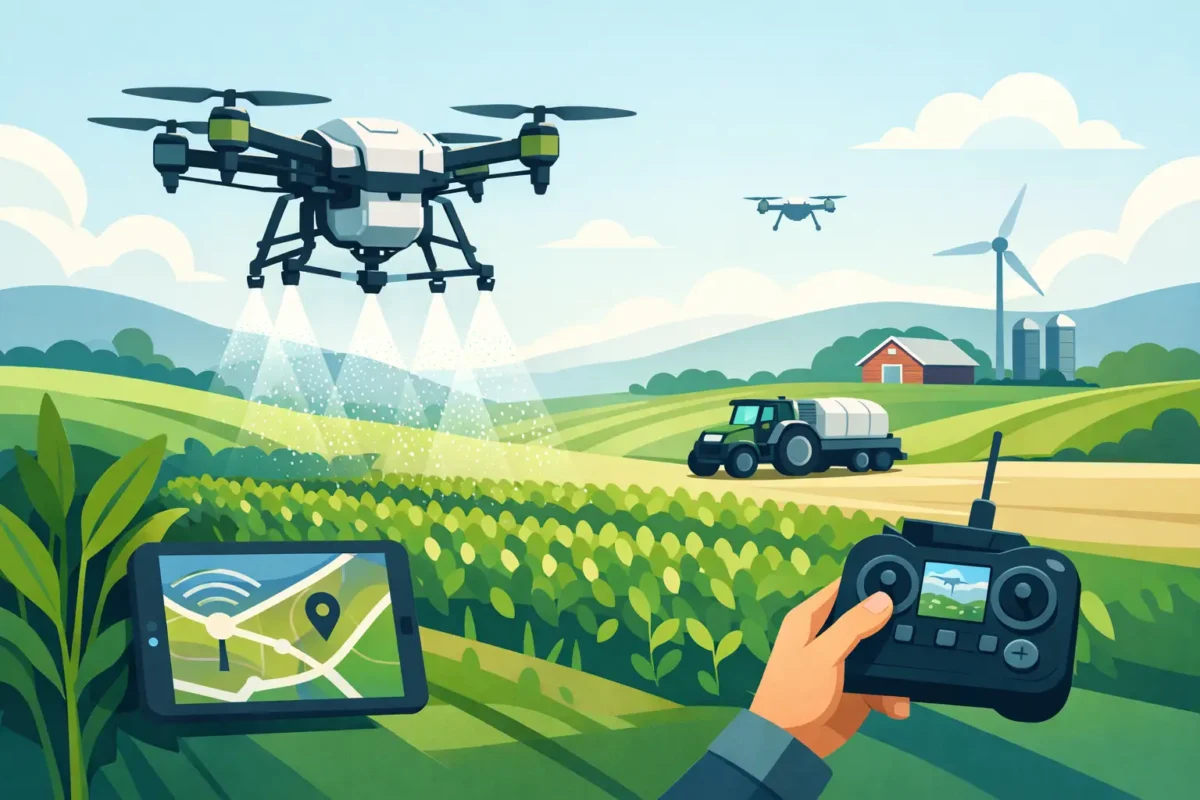
A crop spraying drone does not just fly over a field and dump product. It follows a planned route, holds a steady height over the crop, meters out liquid at a controlled rate, and adjusts to field conditions fast enough to keep the application useful. That is the real answer to how do crop spraying drones work: they combine GPS guidance, onboard sensors, pumps, nozzles, and automated flight control to apply product with much more precision than a manual pass.
For growers and commercial operators, that matters because every acre has a cost attached to it. Labor is tight, chemical prices are not getting cheaper, and missing a spray window can hurt yield fast. A well-built agricultural drone is designed to cover ground efficiently while reducing overlap, drift, and wasted input.
How do crop spraying drones work in the field?
At the most basic level, a crop spraying drone carries a liquid tank, a battery, a pump system, spray nozzles, and a flight controller. Once the operator sets the field boundary and application plan, the drone flies a programmed path across the target area. As it moves, the spray system releases product at a set rate based on speed, swath width, and the job setup.
This is not the same as flying a hobby drone over a farm. Agricultural spraying drones are built to do repeatable work. They are designed for payload capacity, stable low-altitude flight, and accurate coverage. That means the machine is constantly making small corrections while it flies so the product goes where it is supposed to go.
In practice, the workflow is simple. The operator maps the field, selects the spray settings, fills the tank, installs a charged battery, and sends the drone on its route. The drone flies the mission, returns when it needs a refill or battery swap, and then continues until the job is done.
The main systems that make a spraying drone work
The value of a crop spraying drone comes from how its parts work together, not from any single feature. Each system handles one part of the job.
Flight control and navigation
The drone uses GPS and, in many cases, RTK positioning for better accuracy. This helps it hold a straight path and maintain consistent passes across the field. Better positioning reduces skips and overlap, which directly affects chemical use and crop coverage.
Autonomous route planning is a major advantage here. Instead of relying on a pilot to manually judge every pass, the drone follows a digital field plan. On irregular fields, terraces, orchards, or areas with obstacles, that automation can save time and reduce operator fatigue.
Terrain following and altitude control
One reason agricultural drones are effective is constant-altitude flight. Fields are rarely flat. If a drone flies too high, coverage can become uneven and drift can increase. If it flies too low, it risks poor spray pattern performance or contact with the crop.
Terrain-following sensors help the drone adjust its height as ground elevation changes. That keeps the nozzles in a more consistent position relative to the crop canopy. In real field conditions, that consistency matters more than most buyers realize.
Pumps, nozzles, and flow control
The spray system is what actually turns the drone into an application tool. Liquid moves from the tank through a pump and out through nozzles that atomize the product into droplets. The drone’s controller manages flow rate so output matches the application target.
This is where precision pays off. If the drone speeds up or slows down, the system can adjust output to maintain the planned rate. That helps avoid overapplication in one section and underapplication in another. It also gives operators more confidence when treating high-value crops where accuracy affects both cost and results.
Power and payload
Agricultural drones run on high-capacity batteries, and those batteries are doing serious work. They have to lift the aircraft, the spray system, and a loaded tank while maintaining stable flight. Heavier payloads can improve productivity by reducing refill frequency, but they also affect flight time.
That is one of the biggest trade-offs in drone spraying. More capacity can mean fewer trips back to the staging area, but every operation still has to balance tank size, battery cycles, field size, and turnaround speed. On well-managed jobs, fast battery charging and quick swaps keep downtime low.
What happens during a typical spray job?
A typical job starts before the drone leaves the ground. The operator checks weather, product label requirements, field access, and the target area. Wind speed, temperature, and droplet size all affect the final result, so drone spraying is not just about having the equipment. It is also about applying at the right time.
Next comes mission planning. The operator marks the field boundary and sets parameters such as flight speed, altitude, swath spacing, and application rate. If the operation uses an RTK base station or other high-accuracy positioning equipment, that is set up as well.
Once the tank is filled and the battery is installed, the drone lifts off and begins its programmed passes. It sprays on the route, turns automatically at the end of each line, and monitors its remaining liquid and power. When it needs service, it returns for refill or battery replacement.
That repeatable cycle is a major part of the labor-saving benefit. One operator can manage application with much less physical strain than traditional hand spraying, and in some use cases with much less field compaction than ground equipment.
Why growers are switching to crop spraying drones
The reason is simple: they can improve operational efficiency where conventional methods are slow, costly, or limited by field conditions.
A drone can access soft, muddy, steep, or irregular ground without putting tires in the field. It can target smaller blocks or problem areas without the setup burden of larger equipment. It can also reduce worker exposure during application because the operator is not walking through treated rows with a backpack sprayer.
For some farms, the biggest win is labor. For others, it is precision. And for commercial operators, it may be the ability to service more acres with a compact, mobile setup. The exact payoff depends on acreage, crop type, terrain, and how often the drone is used.
Where the technology makes the biggest difference
Crop spraying drones are especially useful in operations where ground rigs are inefficient or hard to use. Specialty crops, orchards, vineyards, rice fields, and uneven terrain are common examples. They can also make sense for row crop operations that need targeted spot treatment, border work, or support during narrow application windows.
Many modern agricultural drones are also multi-use machines. The same platform may be configured for spraying, spreading, and field data collection depending on the setup. That gives buyers more ways to justify the investment across the season.
Limits and trade-offs to understand
Drone spraying is not magic, and it is not a one-size-fits-all answer. Tank capacity is smaller than a large ground sprayer or full-scale aerial application platform, so acres per load are naturally lower. If you are covering very large blocks nonstop, logistics matter. Refill efficiency, battery management, and crew organization all affect productivity.
Weather also matters. Wind, humidity, and temperature influence droplet behavior whether you are applying by drone, ground rig, or manned aircraft. A drone gives you more control in many situations, but it does not remove the need for sound application practice.
There is also a learning curve. Even with advanced automation, operators need to understand calibration, field planning, maintenance, and compliance. The good news is that today’s systems are far more user-friendly than older UAV setups, which makes adoption much easier for practical farm operations.
How do crop spraying drones work for better ROI?
The strongest return usually comes from reducing waste and improving timing. If the drone helps you spray on time, avoid overapplication, reduce labor pressure, and protect yield, the numbers get easier to justify. If it sits unused or is poorly matched to the farm, the value drops.
That is why commercial buyers should look beyond headline specs. Payload, pump performance, battery ecosystem, charging speed, obstacle sensing, route automation, and serviceability all matter. A lower upfront price can be attractive, but uptime and field efficiency are what affect cost per acre over time.
For many operators, DJI Agras models stand out because they combine autonomous flight planning, stable spray control, obstacle avoidance, and practical field capacity in a platform built for real farm work. That matters when you are buying equipment to solve labor and application problems, not to experiment with drone tech.
If you have been asking how do crop spraying drones work, the short answer is that they turn precision flight into precision application. The better question is whether that kind of control can save your operation time, input, and labor where it counts most.
