
Lates News From Refrigerant Gas Wholesale
Drone Seeding for Cover Crops: Is It Worth It?
Apr
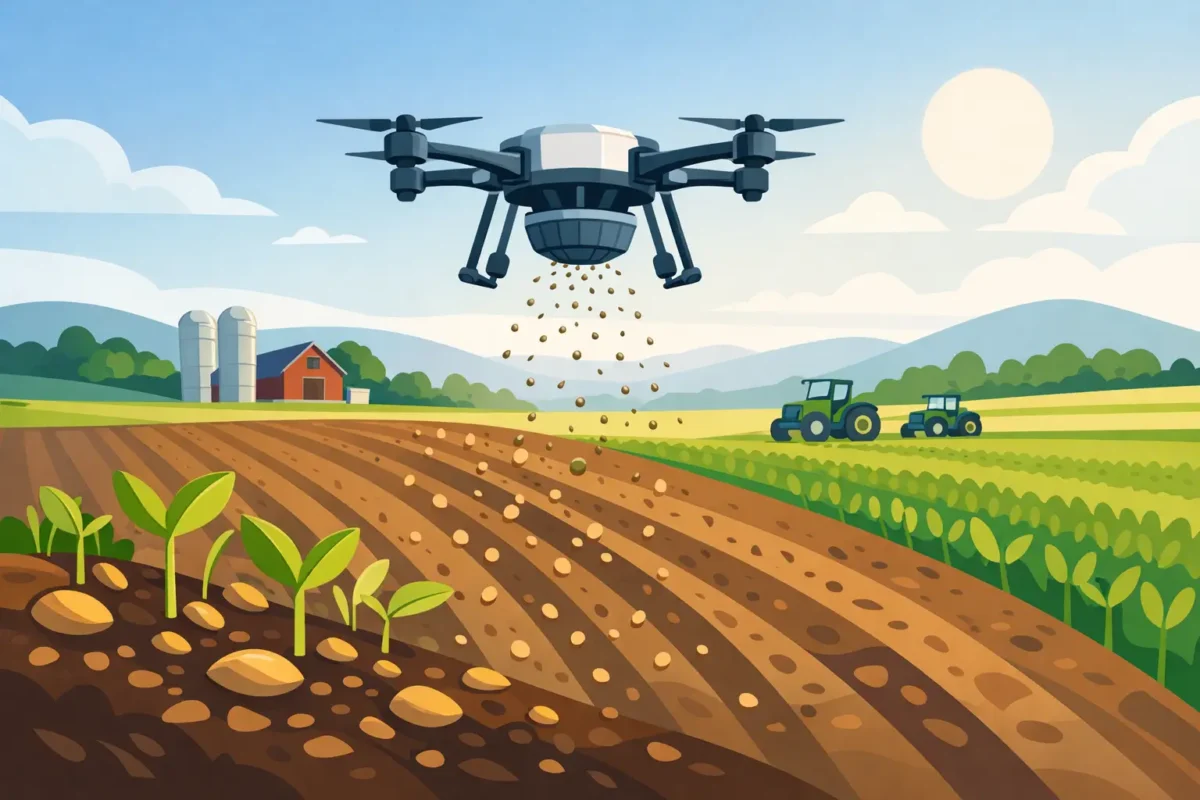
When the combine is still rolling and the calendar is already getting tight, drone seeding for cover crops starts to look less like a nice option and more like a practical way to stay on schedule. That is the real appeal. You can get seed into the field faster, avoid some ground-traffic issues, and keep moving even when field conditions are far from ideal.
For many operators, the question is not whether cover crops make sense. The question is whether there is a better way to establish them without tying up labor, waiting on custom crews, or putting another machine across wet ground. In the right situation, an agricultural drone can solve that problem. It is not magic, and it is not the best fit for every acre, but it can be a strong tool for farms that need speed, flexibility, and better timing.
Why drone seeding for cover crops is gaining ground
Timing drives cover crop success. If seed goes out too late, establishment suffers. If the field is too wet for equipment, the window can close fast. A drone changes that equation by taking ground conditions out of the job.
That matters most in tight harvest windows, late-season weather, and large operations where every pass has to count. Instead of waiting for a spreader rig or trying to squeeze in another field operation, a drone can broadcast seed quickly over standing crops, harvested acres, and areas that are rough, soft, or difficult to access.
There is also a labor angle that is hard to ignore. Many farms are trying to do more with fewer people. Drone application gives one operator the ability to cover ground efficiently without pulling a tractor, tender truck, and extra crew into the field. For farms already looking at aerial application equipment, adding seeding capability creates more value from the same platform.
Where drone seeding works best
Drone seeding for cover crops tends to perform best when the goal is fast broadcast application over a lot of acres. Corn and soybean systems are common examples, especially when operators want to seed ahead of harvest or immediately after. It is also useful on fields where wheel tracks, compaction, or rutting are a concern.
Wet fall conditions are another strong fit. If a spreader truck cannot get in without causing damage, a drone keeps the job moving. The same goes for rolling ground, awkward field shapes, and areas with obstacles that make conventional equipment less efficient.
That said, performance depends on matching the seeding method to the crop, the seed, and the field conditions. Small-seeded species such as clover, brassicas, and some rye applications often lend themselves well to aerial broadcasting. Larger seed or mixes that require more precise soil contact may need a more careful plan. Good emergence still depends on moisture, residue conditions, and getting the seed out at the right time.
What a drone actually improves
The biggest gain is speed to application. When timing is everything, getting seed flown in now instead of waiting three more days can make the difference between a solid stand and a weak one. That is especially true in shorter fall windows.
The second gain is field access. A drone does not care if the headlands are soft or if one side of the field is rough. It can keep working where wheeled equipment would slow down, leave tracks, or stay parked.
The third gain is precision in coverage. Modern agricultural drones are built for repeatable flight paths, controlled spreading, and consistent altitude. That helps reduce skips and overlap compared with less controlled broadcast methods. It also gives operators better control over where seed is going, which matters on irregular fields and around boundaries.
Cost control is part of the picture too. That does not always mean the cheapest cost per acre in every situation. It means reducing labor pressure, avoiding unnecessary machine passes, and making better use of narrow planting windows. For many farms, those operational gains matter just as much as direct application cost.
The trade-offs farmers should understand
Drone seeding is not a replacement for every cover crop planting method. Broadcast seed still depends on rainfall or favorable soil conditions to establish well. If the field is dry, residue is heavy, or the seed mix needs incorporation, results can be uneven.
Application capacity also matters. Drones are efficient, but they still work with finite payloads and battery cycles. On very large acreages, the system works best when the operation is organized well with staged seed, charged batteries, and an efficient refill process. Without that setup, downtime can eat into productivity.
There is also the issue of seed type. Some cover crop blends flow better than others. Seed size, density, and mix uniformity affect spreading performance. Operators need to calibrate carefully and avoid assuming every blend will behave the same.
This is why the answer to “is it worth it” depends on your acres, your labor situation, and how often you plan to use the drone beyond cover crops. If the aircraft will also be used for spraying or spreading other materials, the equipment becomes easier to justify as a year-round productivity tool.
What to look for in a drone seeding setup
A serious cover crop seeding program needs more than a drone that can simply get off the ground. It needs a platform built for agricultural work. Payload capacity matters because more capacity means fewer refill stops and better efficiency across larger fields.
Spreading performance matters just as much. The system needs to handle agricultural materials consistently, maintain even output, and support reliable coverage patterns. Flight stability, terrain following, and obstacle sensing also help keep application accurate when field conditions are less than perfect.
Battery management is another practical issue. A good setup is not just about aircraft specs. It is about keeping the operation moving with enough batteries, charging support, and refill workflow to maintain momentum through the day.
This is where purpose-built agricultural models stand apart from general consumer drones. Equipment designed for spraying and spreading is built to work in real farm conditions, not just fly. For operators comparing options, that difference shows up quickly in acreage covered, refill time, and day-to-day reliability.
How to make drone seeding for cover crops pay off
Start with fields where the drone has a clear operational advantage. Wet ground, standing crops, late harvest timing, and irregular field layouts are strong candidates. These acres show the value of aerial application faster than easy, open fields where a conventional spreader already performs well.
Keep seed selection practical. Choose species and blends that broadcast well and fit your moisture outlook. A simple, proven mix often performs better than a complicated blend that spreads unevenly or needs more ideal establishment conditions than the season will give you.
Treat calibration seriously. Acreage targets, flow rates, swath width, and seed density all affect results. Good equipment helps, but setup still matters. Operators who take time to test and adjust usually get more consistent stands and better return on the acre.
It also pays to think beyond one season. If your operation needs aerial spraying, dry material spreading, or faster response across narrow windows, a drone can support more than cover crop seeding. That is where the economics start to look stronger. Instead of buying a single-use machine, you are investing in a platform that can reduce labor pressure and improve application flexibility across multiple jobs.
Is drone seeding right for your farm?
If your biggest challenge is getting cover crops seeded on time, drone application deserves a serious look. It gives you access when equipment cannot roll, speed when the window is closing, and a practical option for covering acres without adding another ground pass.
If you expect perfect results in every field regardless of moisture, residue, or seed choice, that is not realistic. Like any planting method, aerial seeding works best when it matches the field conditions and the management plan. The upside is real, but so is the need for proper setup.
For farms focused on efficiency, labor savings, and getting more from each equipment dollar, drone seeding for cover crops is more than a trend. It is a workable tool that fits the way modern operations need to move. If you are already evaluating ag drones for spreading or spraying, adding cover crop seeding to that decision is a smart place to start.
