
Lates News From Refrigerant Gas Wholesale
Obstacle Avoidance Farm Drone Benefits
Apr
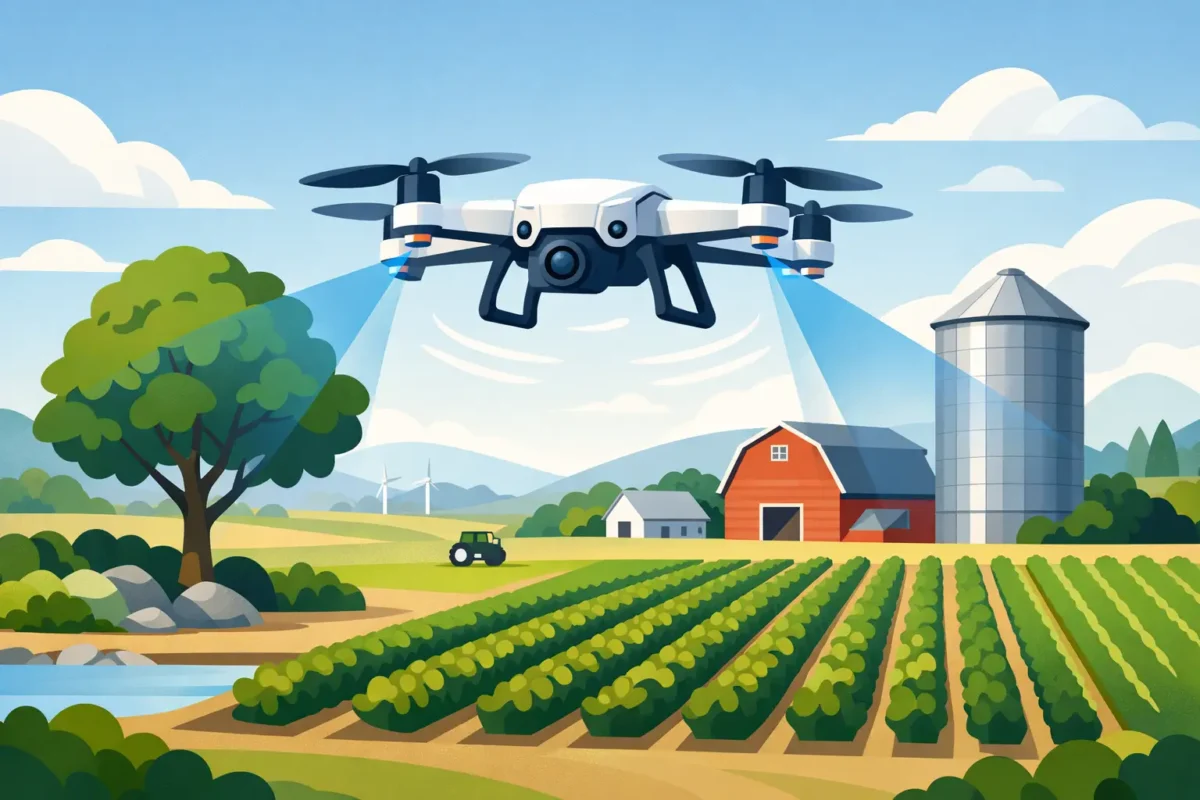
A tree line at the edge of a field, power poles near a turn, uneven ground, irrigation hardware, and surprise obstacles around field borders can slow down a spraying job fast. That is exactly where an obstacle avoidance farm drone starts to earn its keep. For growers and commercial operators, this is not about flashy automation. It is about protecting expensive equipment, keeping application accurate, and getting more acres covered with less downtime.
When a drone can detect and respond to obstacles during flight, the value shows up in real operating conditions. You spend less time making risky manual corrections, less time worrying about collisions, and more time focused on coverage, timing, and output. On a busy farm schedule, that matters.
What an obstacle avoidance farm drone actually does
An obstacle avoidance farm drone uses onboard sensors and intelligent flight controls to detect objects in its path and adjust movement to reduce the chance of impact. In agricultural work, those objects can include trees, utility poles, fencing, irrigation structures, terrain changes, and field-edge obstacles that are easy to miss during repetitive passes.
This capability matters most when the drone is flying low and carrying a workload. Spraying and spreading missions often happen close to the crop canopy, where stable height and route control are critical. If the aircraft can sense obstacles and react in time, the operator gets a safer flight path and more confidence in autonomous operation.
That does not mean the drone can replace operator judgment. Obstacle avoidance is a working feature, not a license to ignore the field environment. Dust, lighting, crop density, wire visibility, speed, and route setup can all affect how well a system performs. The best results come when obstacle sensing is treated as an extra layer of protection, not the only one.
Why obstacle avoidance matters on real farm jobs
The biggest benefit is simple – fewer mistakes in the field. A collision can mean damaged arms, props, tanks, sensors, or landing gear. It can also stop an application window when timing matters most. If weather is closing in or a pest pressure issue needs immediate treatment, losing a machine for repairs is more than an inconvenience.
Obstacle avoidance also supports more consistent application. When a drone stays on path and maintains better control around field edges and irregular shapes, coverage improves. That can help reduce skips, overlaps, and waste, especially in fields that are not perfect rectangles.
There is also a labor advantage. Skilled drone operators are valuable, but every farm is dealing with time pressure and workforce constraints. Intelligent flight features reduce workload during repetitive missions and help operators manage larger jobs more efficiently. That does not eliminate the need for training, but it can shorten the gap between basic operation and productive operation.
Obstacle avoidance farm drone value by use case
Spraying around field edges
Field borders are where many application problems begin. You may have trees, ditches, roads, signs, and fence lines near the treatment area. A drone with obstacle sensing helps the aircraft handle turns and route changes more safely, which is especially useful when spraying close to edge zones where precision matters.
Spreading in uneven terrain
Spreading jobs can involve rolling ground, embankments, or mixed field conditions. In those environments, the combination of terrain following and obstacle detection can improve flight stability and reduce risk. This is useful for operators covering large acreages where manual adjustment on every pass would waste time.
Working around permanent infrastructure
Many farms have fixed assets that cannot be avoided by simply choosing another field. Pumps, trellis systems, storage areas, poles, and irrigation equipment are part of the operating environment. An obstacle avoidance farm drone helps create a more practical path through those conditions, especially when autonomous planning is part of the workflow.
What buyers should look for
Not every agricultural drone handles obstacles the same way. Some systems are better suited for open fields, while others are built to perform in tighter or more complex environments. If you are comparing options, look beyond the headline feature and ask how the sensing system supports actual field work.
Sensor coverage matters. Forward sensing alone is not the same as multi-directional awareness. Response speed matters too, especially during turns and lower-altitude operations. The flight controller also plays a big role because sensing is only useful if the aircraft can make smooth, reliable adjustments without disrupting the application pattern.
You should also consider how obstacle avoidance works alongside other farm-focused features. Constant-altitude flight, autonomous route planning, payload capacity, spray consistency, battery turnaround, and refill efficiency all affect the real value of the machine. A drone that avoids obstacles but slows down productivity too much may not be the right fit. The best choice is the one that balances safety with acre-per-hour performance.
The trade-off: safety features do not remove planning
Obstacle avoidance is a strong advantage, but there are limits. Thin wires can be difficult for some systems to detect. Harsh sun angles, fog, heavy dust, or dense vegetation can reduce sensor effectiveness. Field scouting still matters, and route setup still matters.
That is why practical operators treat the technology as part of a complete process. You inspect the site, identify hazards, plan the mission, and let the drone’s intelligence support the job. That approach protects the aircraft and helps you get the best use from the automation already built into modern ag platforms.
If your fields are wide open and simple, obstacle avoidance may not be the deciding factor in every purchase. In that case, payload, battery system, and operating cost might carry more weight. But if your operation includes irregular parcels, tree lines, infrastructure, or mixed terrain, this feature quickly moves from nice-to-have to necessary.
How it affects operating cost
The value is not only about preventing a crash. It also shows up in smaller cost factors that add up over a season. Better route control can reduce rework. Fewer collisions can mean fewer replacement parts and less repair downtime. More confident autonomous flight can help one operator manage more acreage in less time.
There is a profitability angle here too. When chemical placement is more controlled and unnecessary overlap is reduced, input efficiency improves. When a machine stays in service during critical windows, scheduling improves. And when labor pressure is high, a smarter aircraft helps keep work moving without adding complexity for its own sake.
For buyers focused on ROI, that is the real point. A farm drone should not just fly well in a demo. It should save time, reduce risk, and support better field output over the course of a season.
Why DJI Agras drones stand out in this category
For operators shopping practical ag equipment, DJI Agras drones have earned attention because they are built around productivity, not hobby use. Features like autonomous flight planning, constant-altitude operation, and obstacle sensing are designed to support spraying and spreading work in actual farm conditions. That is the difference commercial buyers care about.
The right model depends on acreage, crop type, field layout, and workload. A smaller operation may prioritize lower entry cost and simple deployment. A larger business may need higher throughput, faster battery rotation, and stronger support for repeated autonomous missions. Either way, obstacle avoidance becomes more valuable as job complexity increases.
Is an obstacle avoidance farm drone worth it?
If your operation deals with irregular fields, obstacles near treatment zones, or tight application windows, the answer is usually yes. The feature helps protect equipment, supports more accurate field work, and makes autonomous operation more practical. Those gains translate into fewer interruptions and better use of every spray or spreading day.
If your land is flat, open, and easy to navigate, the return depends more on your growth plans. Many buyers start by looking at payload and price, then realize later that safer automation saves money too. That is why it pays to evaluate the whole operating picture, not just the sticker price.
A good drone should do more than carry product over a field. It should help your operation move faster with fewer avoidable problems. When obstacle avoidance is paired with the right platform, it becomes a practical tool for protecting uptime, controlling costs, and keeping farm work on schedule. That is a feature worth taking seriously before your next season starts.
