
Lates News From Refrigerant Gas Wholesale
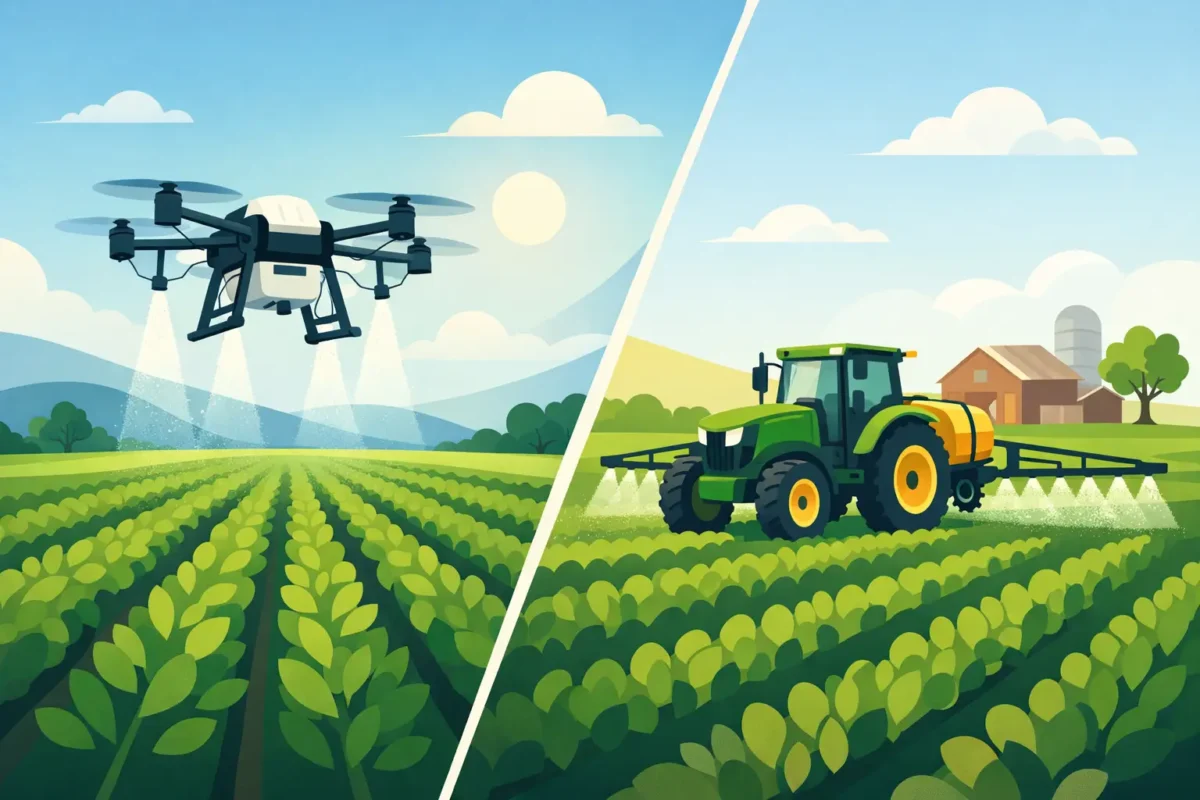
Drone Spraying vs Tractor Spraying
Apr
When a field is too wet for tires, the weeds do not wait. That is where drone spraying vs tractor spraying becomes a real business decision, not just a technology comparison. For many growers and applicators, the question is simple: which setup gets product on target faster, with less waste, less crop damage, and less labor pressure?
The honest answer is that both have a place. Tractor spraying is still a proven workhorse for broad-acre operations and high-volume jobs. Drone spraying brings a different kind of advantage – access, precision, and flexibility when field conditions, terrain, or labor make ground equipment harder to use efficiently.
Drone spraying vs tractor spraying: the core difference
A tractor sprayer covers ground by driving through the field. A spray drone covers ground from above. That single difference changes everything from timing to compaction to labor needs.
With a tractor, you are dealing with wheel tracks, turning radius, rutting risk, and crop contact. You also need field access that supports the machine. If the ground is soft after rain, application may be delayed. In some crops and field conditions, that delay can cost more than the application itself.
With a drone, the field does not need to be drivable. The aircraft flies programmed routes, holds a consistent height above the crop, and applies product without putting tires into the field. That is a major operational advantage when timing matters and conditions are less than ideal.
Where drone spraying has a clear edge
The biggest strength of agricultural drones is access. If your operation deals with muddy ground, narrow field entries, tall crops, terraces, orchards, irregular field shapes, or sensitive areas, a drone can solve problems that a tractor cannot solve cleanly.
Crop damage is another major factor. A tractor entering the field creates mechanical impact. Depending on crop stage and row spacing, wheel tracks can take out plants and reduce marketable yield. A drone avoids that entirely. On high-value crops, that difference matters fast.
Labor is also part of the equation. A tractor sprayer requires an operator in the cab for the full job. A spray drone still needs trained oversight, battery management, mixing support, and mission planning, but the workflow can reduce the need for long hours behind the wheel. For farms struggling to keep skilled operators in season, that is not a small benefit.
Precision is where drones continue to gain ground. Modern agricultural platforms such as DJI Agras units are built for planned flight paths, stable altitude control, obstacle sensing, and repeatable application. That gives operators a strong tool for spot treatment, edge work, difficult terrain, and targeted areas where a full tractor pass is not the most efficient move.
Where tractor spraying still makes sense
Tractor spraying remains strong in large, open fields where the machine can move continuously and carry high liquid volume. If you are covering broad acreage with standard access, limited obstacles, and long straight runs, the economics of a large ground rig can still work very well.
Tank capacity is a practical advantage for tractors. A larger sprayer can stay in the field longer before refilling. On big operations with established spray logistics, that supports high daily output.
There is also the familiarity factor. Many farms already own tractor equipment, already know the maintenance routines, and already have operators trained for it. That lowers the barrier to continued use, even if it does not always mean it is the best tool for every application window.
Speed is not just acres per hour
A lot of comparisons stop at headline coverage numbers, but that misses the real issue. The better question is how quickly you can complete the job from decision to finished application.
A tractor may have strong field capacity once it is moving, but it can lose time when fields are soft, entrances are tight, or crops are too advanced for safe entry. A drone may carry less liquid per load, but it can be in the air fast, move between awkward zones efficiently, and start working where a wheeled machine would wait.
That matters in fungicide timing, late-season rescue treatments, and post-rain weed pressure. If the faster option is the one that can actually operate today, not two days from now, then the practical speed advantage may belong to the drone.
Drift, coverage, and application quality
This is where buyers need a realistic view. Drone spraying is not automatically better in every spray scenario, and tractor spraying is not automatically more consistent. Application quality depends on setup, nozzle selection, droplet size, weather, crop canopy, speed, and operator decisions.
Drones can provide excellent targeted application, especially in areas where constant height above the crop helps maintain uniformity. Their downwash can also improve canopy penetration in some use cases. But success depends on matching the mission to the product and conditions.
Tractors can deliver dependable coverage over wide acreage, particularly when set up well for the crop and weather. But they also introduce the ground-contact tradeoff and may be less practical in fields where terrain or crop stage limits good passes.
The right comparison is not which machine is perfect. It is which machine gives you the best result for this field, this crop stage, and this application window.
Cost looks different than the price tag
Some buyers compare drone spraying vs tractor spraying by equipment purchase price alone. That is too narrow.
A tractor-based system brings fuel use, maintenance, tire wear, potential compaction, crop damage, and labor hours. If you need a high-clearance machine, the capital cost can be substantial. If fields are wet and application is delayed, there is also the hidden cost of missing the ideal timing.
A drone system has its own cost structure – aircraft, batteries, chargers, support equipment, and training. But it can reduce labor pressure, reduce field damage, cut access problems, and improve how precisely product is placed. On some farms, those savings add up quickly. On others, the best model is not replacing tractor spraying entirely but adding drone capacity where the tractor is least efficient.
That hybrid approach is often the smartest business move. Use the tractor where it is strongest. Use the drone where it saves time, prevents damage, or keeps the schedule on track.
Best fit by operation type
If you run broad, flat acreage with easy field access and already have a productive ground spray setup, tractors may continue to carry the bulk of your volume. That is especially true when refill logistics and long field runs support high output.
If your acres include soft ground, fragmented parcels, levees, terraces, orchards, vegetables, specialty crops, or time-sensitive treatment zones, drones become much more attractive. They also fit well for custom operators who need flexibility across different field types and customer needs.
For many growers, the strongest case for drones is not replacing every pass. It is eliminating the situations where tractor spraying creates avoidable loss, delay, or inefficiency.
Why more operators are adding drones now
The market pressure is clear. Labor is tighter. Input costs are higher. Application timing is harder to miss without consequences. Buyers want equipment that pays its way through productivity, not novelty.
That is why agricultural drones are getting serious attention from commercial operators. They are not hobby machines. They are farm tools built to spray, spread, and support precision fieldwork with less dependence on ideal ground conditions.
For buyers looking at direct equipment value, platforms like DJI Agras stand out because they combine practical automation with real field utility. The benefit is straightforward: more control over timing, less crop contact, and a more flexible way to apply product when the window is narrow.
The real decision in drone spraying vs tractor spraying
If your question is which machine is universally better, you are asking the wrong one. The real question is where your current spray process loses money – in delays, labor, missed windows, crop damage, overlap, or limited access.
If those losses are small, your tractor setup may still be doing its job well. If those losses show up every season, a drone can be a practical upgrade with a clear return.
The farms getting the best results are not choosing based on tradition. They are choosing based on field conditions, labor realities, and application timing. When you look at it that way, the better option is the one that helps you protect yield and keep the work moving when the season gets tight.
