
Lates News From Refrigerant Gas Wholesale
Best Drone for Spreading Fertilizer
Apr
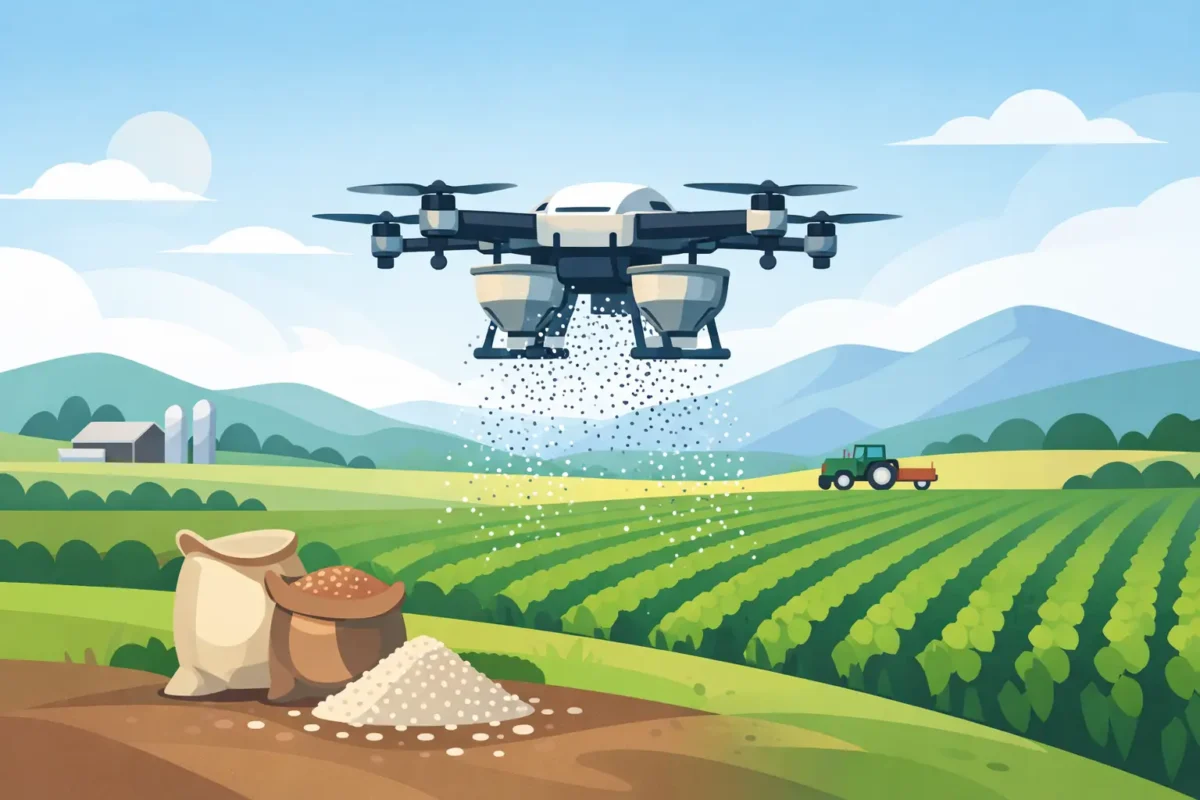
Fertilizer timing does not wait for perfect field conditions. When ground rigs leave ruts, labor is short, or fields are too wet to enter, a drone for spreading fertilizer can keep your application schedule moving without putting more pressure on your crew or equipment.
For many growers and ag operators, that is the real value. This is not about buying a new gadget. It is about covering acres on time, placing product more accurately, and reducing the waste that comes from overlap, skips, and delayed passes. A spreading drone also gives you flexibility. The same platform can often support multiple field jobs across the season, which makes it easier to justify the investment.
Why a drone for spreading fertilizer makes sense
The biggest reason operators look at spreading drones is simple – they solve real field problems. Wet soil, narrow application windows, labor shortages, and rising input costs all make traditional fertilizer application harder to manage. A drone gives you another way to get product out when conditions are working against you.
Unlike heavier equipment, a drone does not compact the field. That matters in soft ground and in crops where wheel tracks can cost yield. It also matters when you need to make a late pass without tearing up the stand. In smaller or irregular fields, drones can be even more efficient because they are not forced to work around awkward borders the way larger ground equipment often is.
There is also a precision advantage. A properly set up agricultural drone can maintain a consistent flight path and application pattern, helping reduce uneven spreading. That does not mean every acre will look identical under every condition. Wind, product type, and application rate still matter. But compared with manual methods or rushed fieldwork, drones give operators much tighter control.
What a fertilizer spreading drone actually does well
A drone for spreading fertilizer is best suited for dry materials that benefit from targeted, repeatable application. That can include granular fertilizer, some seed types, and other spreadable ag inputs depending on the setup and the material characteristics.
What it does especially well is handle areas where access is difficult or timing is tight. If a field is too soft for a buggy, or if you need to move quickly across multiple blocks, a drone can be deployed with less setup and less disruption. Many operators also use spreading drones to treat variable zones rather than blanket-applying the same rate everywhere.
This is where the economics start to improve. The gain is not only in labor savings. It is in reducing product waste, protecting the crop, and staying on schedule. A delayed fertilizer pass can cost more than the application itself if crop performance slips because nutrients were not delivered when needed.
What to look for in the best drone for spreading fertilizer
Not every ag drone is built the same, and not every spreading setup fits every operation. If you are shopping for the best drone for spreading fertilizer, focus on field performance rather than spec-sheet hype.
Hopper capacity and output
Capacity affects how often you stop to refill. A larger hopper can improve efficiency, especially on bigger acreages, but it also needs to balance with battery performance and payload handling. More capacity is useful only if the aircraft can maintain stable, accurate application under load.
Output matters just as much. You want a system that can deliver the rate you need without becoming inconsistent as conditions change. A spreading drone should give you dependable control over application volume so you are not guessing from pass to pass.
Flight stability and terrain following
Fields are rarely flat, and fertilizer does not spread evenly when altitude varies too much. Constant-altitude operation and terrain following help keep the drone at the right height over the crop or ground, which supports a more consistent spread pattern.
Stability also matters in day-to-day use. A platform built for agricultural work needs to stay predictable under load, turn cleanly at field edges, and handle repetitive operations without constant correction from the pilot.
Autonomous route planning
Autonomous flight planning saves time and reduces operator fatigue. Instead of manually managing every pass, the system can follow preplanned routes across the field. That helps reduce overlap and skips while making larger jobs easier to repeat.
For commercial operators and larger farms, this is one of the strongest selling points. Precision is valuable, but repeatability is where the real operational gains show up over time.
Obstacle sensing and field safety
Trees, poles, power lines, and uneven terrain are part of real farm work. Obstacle avoidance and better situational awareness can reduce risk during application. It is not a substitute for good judgment, but it does make routine work safer and more manageable.
A safer workflow matters because downtime costs money. A drone that helps avoid preventable incidents is protecting more than hardware. It is protecting your schedule.
Where DJI Agras drones fit
For growers who want a practical fertilizer spreading platform, DJI Agras models stand out because they are built for actual farm use, not general-purpose flying. They are designed around payload work, autonomous field operations, and multi-use application across spraying and spreading jobs.
That matters if you are trying to get more value from one purchase. A spreading drone that can also support spraying, mapping, or other field tasks gives you better equipment utilization across the season. Instead of owning a single-purpose machine, you are adding a tool that can work in more than one part of your operation.
For buyers focused on cost control, that flexibility is a major advantage. It is one reason many operators shopping at DJI Agras Drone are not just comparing drone prices. They are comparing how much labor, time, and field delay the equipment can remove from the season.
The trade-offs you should consider
A drone for spreading fertilizer is not the answer for every acre or every farm. If you are covering very large blocks with simple access and ideal ground conditions, conventional equipment may still carry more volume in a single day. Drones are strongest where precision, timing, access, and flexibility carry real value.
Material choice also matters. Some granular products spread better than others, and weather can affect performance. Wind is a real variable. If conditions are poor, application quality can drop. That means operators still need to plan jobs around field realities rather than assuming the drone solves every problem automatically.
There is also a learning curve. The best results come from proper calibration, route planning, and understanding how the aircraft performs with your material and target rate. The technology makes the work easier, but it still rewards operators who treat it like professional equipment.
How to know if the investment pays off
The return usually comes from a mix of savings and better timing. If you are fighting labor shortages, paying for repeated passes, or losing days because machines cannot enter the field, the case gets stronger fast. If your operation values precise application and lower crop disturbance, the value improves even more.
Think about the cost of missed windows, input waste, stand damage, and extra labor. Then compare that with a system that can be deployed quickly and used across multiple applications. In many operations, the question is not whether a drone can spread fertilizer. The better question is how much inefficiency you are still carrying without one.
Buying with the right expectations
The best purchase is not the biggest drone or the cheapest one. It is the platform that matches your acreage, product type, crew capacity, and seasonal workload. A smaller operation may prioritize flexibility and ease of use. A commercial applicator may care more about output, battery workflow, and route management across many fields.
That is why straightforward buying matters. You want equipment that is clearly built for ag work, supported by the right accessories, and easy to evaluate based on field results. When you are comparing options, keep the focus on productivity. How many acres can you cover, how accurately can you place product, and how often can the drone help you avoid delays or waste?
A drone for spreading fertilizer earns its place when it turns a hard application day into a manageable one. If it helps you protect timing, reduce labor strain, and apply product with better control, it is doing exactly what farm equipment should do – paying its way in the field.
