
Lates News From Refrigerant Gas Wholesale
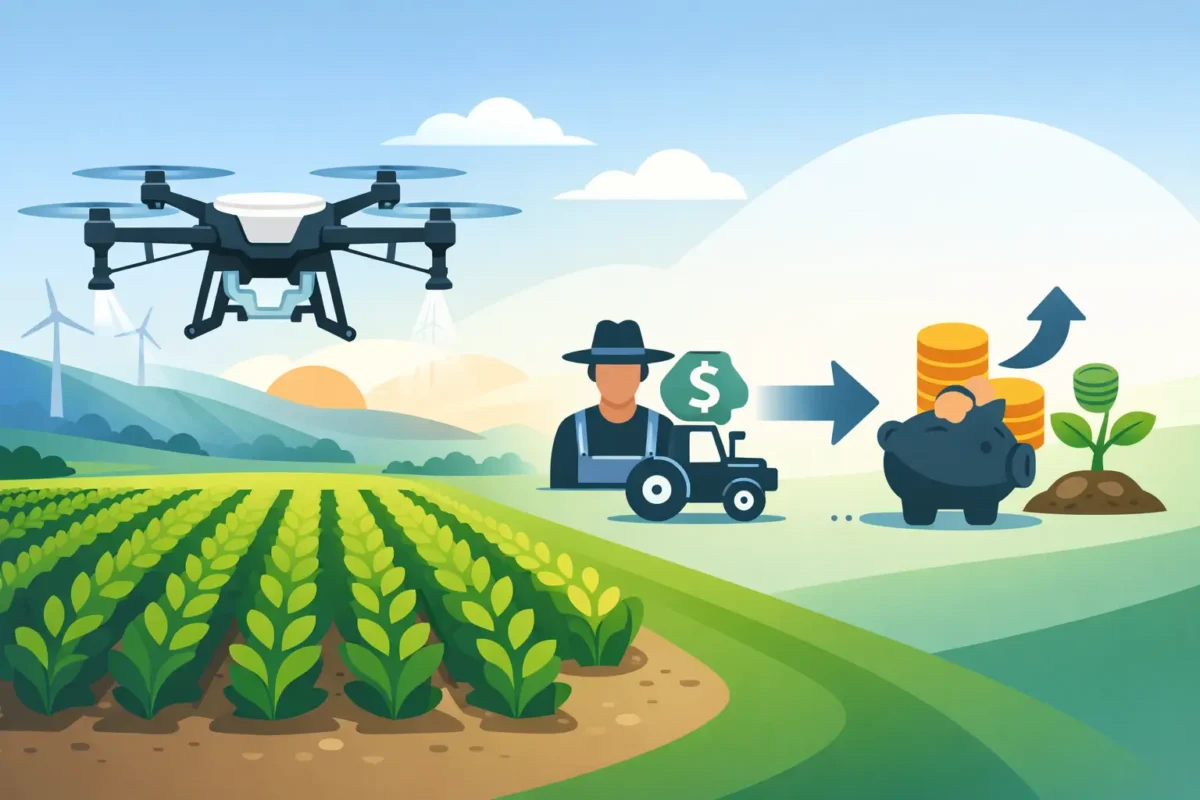
Crop Spraying Drone Cost Savings Explained
Apr
If you are pricing out new spray equipment, the real question is not just what a drone costs to buy. It is what crop spraying drone cost savings look like over a season, across your acres, and against the labor and input pressure you are already dealing with. For many growers and commercial applicators, that is where the numbers start to make sense fast.
A crop spraying drone is not a gimmick purchase. It is a working tool built to reduce wasted passes, tighten application rates, and cover fields when ground rigs are slowed down by crop height, soil conditions, or labor shortages. The savings are real, but they depend on how you farm, how often you spray, and what costs are hitting your operation the hardest.
Where crop spraying drone cost savings usually show up
Most buyers first look at labor, and for good reason. Finding reliable help is harder than it used to be, and the cost of keeping skilled operators in the field keeps climbing. A spraying drone can cut down the labor tied to manual application and reduce the need to dedicate a worker to a full-size ground unit for every job. One trained operator can manage a lot of work in a day, especially with planned routes and battery rotation handled correctly.
Chemical savings are often just as important. A drone applies with more control than broad, less targeted methods, which helps reduce overapplication. When you are paying serious money for crop protection products, even small improvements in precision can matter. Saving a few percentage points on chemical use across a full season can add up faster than many buyers expect.
There is also the question of crop damage. Ground rigs do a lot of work, but they can also create losses through wheel tracks and repeated traffic. In some crops, that damage is minor. In others, it is a meaningful cost that often gets ignored because it is spread across the season instead of showing up as one line item. A drone removes that issue entirely during aerial application.
Time savings matter too. If a field needs treatment in a tight weather window, speed has direct value. Missing that window can lead to more disease pressure, more weed competition, or reduced effectiveness from the product you are applying. The drone is not only saving labor hours. It may also be protecting yield by letting you act sooner.
What drives ROI on a spraying drone
The return is not the same for every farm. A smaller operation with a few limited spray events each year may see slower payback than a grower managing many acres, multiple crop stages, or hard-to-reach areas. A commercial operator serving several farms may see a much faster return because the machine is working more often.
Usage rate is the biggest factor. The more acres you treat and the more often you use the drone for spraying, spreading, or spot work, the more value you pull from the purchase. A machine that sits in the shop will not save much. A machine that runs through fungicide applications, foliar feeding, reseeding, and targeted treatment work starts to justify itself quickly.
Input costs also shape the math. If herbicides, fungicides, insecticides, and liquid nutrients are a major expense on your farm, precision matters more. When every gallon costs more than it did a few years ago, tighter application can have a direct effect on profit.
Then there is field accessibility. Wet ground, irregular field shapes, slopes, tree lines, and sensitive crop stages all make drones more attractive. In those situations, the savings are not only about lower costs. They are about being able to complete the job without waiting on conditions that may not improve in time.
Comparing drone costs to traditional application methods
A drone should not be treated as a one-for-one replacement for every sprayer in every condition. That is not realistic. Larger ground equipment can still be the better fit for broad-acre work where terrain is friendly, timing is flexible, and capacity is the main priority.
But that does not weaken the case for drone savings. It sharpens it. Drones tend to perform best where precision, timing, and access matter most. That includes late-stage crop protection, spot spraying, fields with soft ground, and jobs where you want to avoid running equipment through standing crop.
Compared with manual spraying, the labor savings are usually obvious. Compared with full-size ground rigs, the benefit is often more situational but still strong. You may spend less on fuel, reduce maintenance tied to heavy equipment use, and avoid some wear-and-tear costs that come with repeated field traffic. If you are outsourcing aerial or specialty application work, bringing some of that capability in-house can also shift the numbers in your favor.
The real costs buyers should include
The purchase price matters, but it is only one part of the ownership picture. Buyers should also look at batteries, charging systems, training, maintenance items, and any downtime planning needed to keep operations moving during the season. A cheap entry price means less if the setup does not match the acres you need to cover.
Battery strategy is a major factor. If you want strong daily output, you need enough batteries and charging support to avoid bottlenecks. That adds to the upfront spend, but it also determines whether the drone works like a serious farm tool or feels limited when work piles up.
Service and parts availability matter too. Agricultural equipment has to be supported. If a motor, prop, pump, charger, or battery hub issue stops a job at the wrong time, delays can erase part of the value. That is why many buyers focus on proven platforms and straightforward access to the equipment and accessories they will actually need.
Training is another cost, but it is usually a productive one. A well-trained operator gets better coverage, fewer mistakes, and more useful output from autonomous flight planning and application controls. That means better performance and better savings over time.
How crop spraying drone cost savings play out on the farm
The strongest savings usually come from combining several smaller gains instead of expecting one dramatic number to carry the whole decision. You save some labor. You trim some chemical waste. You reduce crop damage from tire tracks. You cover acres faster in short windows. You avoid delays on wet ground. Put together, those gains can be substantial.
That is why practical buyers tend to look beyond sticker price. A drone that costs more upfront but delivers better reliability, obstacle sensing, stable spraying performance, and stronger workflow efficiency may be the cheaper machine over time. Operational value beats low price if the lower-priced option cannot keep up during peak demand.
For many farms, a drone also creates flexibility. Instead of waiting for a custom applicator schedule or trying to fit every treatment around ground conditions, you get more control over timing. That flexibility has value because it lets you respond when the crop needs attention, not just when equipment is available.
In operations that already use farm automation and precision planning, the savings can be even better. Mapping, repeatable routes, and controlled application make it easier to standardize work and reduce wasted motion. That is a practical advantage, not just a tech feature.
When the savings are strongest
Operations dealing with labor shortages usually see the value quickly. So do growers with high-value crops, irregular fields, or frequent in-season applications. Commercial operators can often justify the investment faster because they spread the equipment cost across more billable acres.
The savings may be slower for farms with very limited application needs or buyers who plan to use the drone only occasionally. That does not mean it is a bad investment. It means the timeline is different, and the purchase should be sized around real use, not best-case assumptions.
This is where equipment selection matters. The right setup depends on your acreage, application volume, crop mix, and workflow. A serious agricultural drone platform with dependable batteries, charging support, and parts access gives you a better shot at turning promised savings into actual operating results. That is also why many buyers looking for DJI Agras equipment focus on retailers that keep the process simple and price-conscious, like DJI Agras Drone.
A spraying drone earns its place when it helps your farm spend less to get the same job done better, or when it helps you get a better result at roughly the same cost. If you are looking at labor pressure, rising input prices, and tighter application windows, the smartest next step is to run the numbers against your own acres and your own spray schedule. That is usually where the decision gets a lot clearer.
