
Lates News From Refrigerant Gas Wholesale
Precision Agriculture Drone Application Guide
Apr
Labor is tight, chemical costs are up, and weather windows keep getting shorter. That is exactly why precision agriculture drone application is moving from a nice extra to a serious operating tool for farms that need to spray, spread, and manage acres faster with less waste.
For many growers and ag service operators, the value is simple. A drone can treat targeted areas with better control, reduce overlap, keep workers out of difficult field conditions, and help cover ground when timing matters most. The technology sounds advanced, but the buying decision usually comes down to a practical question – will it save time, reduce input waste, and help the operation stay productive? In many cases, the answer is yes.
What precision agriculture drone application actually means
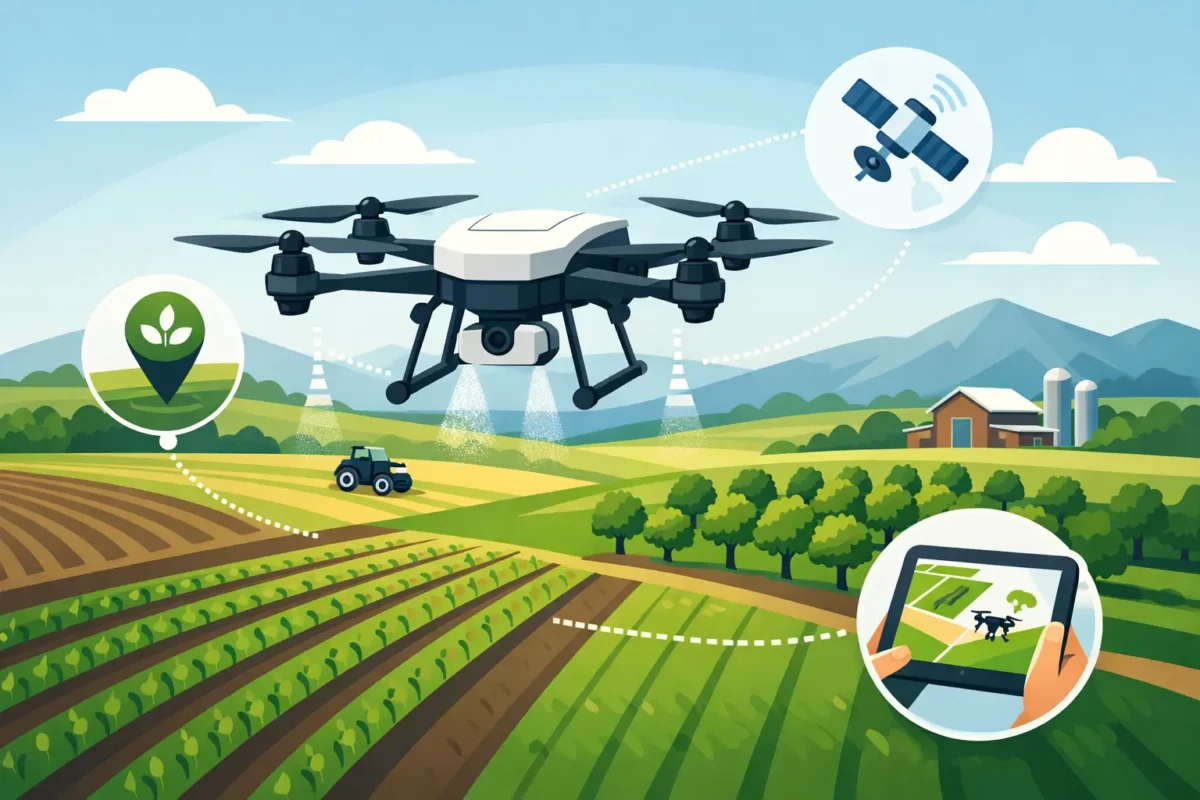
Precision agriculture drone application is the use of UAVs to apply crop inputs or collect field data with a high level of placement control. In real farm use, that usually means spraying fungicides, herbicides, insecticides, and foliar products, or spreading seed, fertilizer, and granular materials where they are needed most.
The key difference is precision. Instead of treating a field with the same approach from edge to edge, drones make it easier to match the application to the field condition. Flight planning, terrain following, GPS positioning, and automated route control all help keep coverage more consistent. That matters because inconsistent coverage costs money twice – once in wasted product and again in missed crop performance.
This does not mean drones replace every ground rig or every manned aircraft. They fit best where accuracy, access, and speed are the priority. Wet fields, tall crops, irregular boundaries, and smaller treatment zones are where they often show their value fastest.
Where drone application delivers real farm value
The strongest case for drones is not that they can do everything. It is that they can solve specific field problems better than older methods in the right conditions.
Spraying is the most obvious example. When a field is too muddy for a ground machine, waiting can cost yield. A spraying drone can get in without tire tracks, soil compaction, or crop damage from rolling through the field. That alone can make a major difference during a tight disease or pest control window.
Spreading is another high-value use. Cover crop seed, dry materials, and selected granular products can be applied quickly over hard-to-reach zones, test plots, uneven ground, and post-rain fields. For operators managing multiple properties, that flexibility helps keep schedules on track.
Drones also support field mapping and spot treatment decisions. Even when the main goal is application, better aerial visibility can help identify pressure areas, drainage issues, stand gaps, and trouble spots that deserve a more targeted response. That kind of decision support is where precision starts turning into measurable savings.
Precision agriculture drone application for spraying
Spraying gets most of the attention because it addresses several expensive problems at once. A properly equipped agricultural drone can maintain a more controlled flight path, hold a more consistent height over the crop, and follow planned routes that reduce skips and overlap.
For farms dealing with labor shortages, that matters. One trained operator can manage work that would otherwise depend on more labor, larger equipment logistics, or outside scheduling. The result is not just convenience. It is more control over when the job gets done.
Application quality still depends on setup. Nozzle choice, droplet size, flight speed, altitude, weather, and product type all affect results. That is where buyers need to stay realistic. A drone is a highly capable platform, but performance comes from matching the aircraft and settings to the crop and job. The best outcomes come from treating drones like farm equipment, not gadgets.
For many row crop, specialty crop, and custom application operations, the strongest benefit is responsiveness. If disease pressure shows up in one section of a field, a drone can often treat that area quickly without mobilizing larger equipment than the job requires.
Why spreading and seeding are growing fast
Spraying may lead the market, but spreading and seeding are becoming just as compelling. Farms looking to improve soil health or streamline cover crop programs often face the same bottleneck – timing. Once harvest starts, there is limited room to get seed where it needs to go.
A drone can help fill that gap. It can spread cover crop seed into standing crops, apply material over awkward field shapes, and reach sections that are slow or inefficient with conventional equipment. For some operators, this turns a delayed program into one they can actually execute on time.
There are limits, of course. Payload, hopper size, refill frequency, and product flow characteristics all affect throughput. On very large acreage, drones may work best as part of a broader system rather than the only spreading tool. But for targeted acres, urgent windows, and fields where access is the main issue, they can be a strong fit.
The features that matter most when buying
Not every buyer needs the same setup, but a few capabilities consistently matter in a commercial operation. First is tank or spreader capacity. More capacity means fewer refill stops, which helps productivity, but it also needs to be balanced with workflow, battery strategy, and transport practicality.
Second is autonomous flight planning. Automated routes help standardize coverage and reduce operator fatigue. That is especially important on repetitive jobs where consistency is worth more than manual control.
Third is terrain following and constant-altitude performance. Fields are rarely flat, and uneven crop canopies make height control important for spray quality and safety. Obstacle sensing and avoidance also matter, especially around trees, poles, irrigation structures, and irregular field edges.
Battery and charging workflow deserve just as much attention as the aircraft itself. A good drone can lose productivity fast if charging, swap times, and power management are not planned correctly. Commercial buyers should think in terms of a complete operating package – aircraft, batteries, chargers, hubs, parts support, and field-ready accessories.
That is one reason many farms look at dedicated agricultural platforms like DJI Agras models. They are built around farm work, not hobby flying, and that difference shows up in payload handling, automated operation, and application-focused design.
What precision agriculture drone application does for costs
Buyers usually start with purchase price, but the smarter question is total operating value. Precision agriculture drone application can lower costs by reducing labor demand, minimizing product waste, and helping operators act faster when crop timing matters.
Less overlap means less chemical waste. More targeted treatment can reduce unnecessary application in low-pressure areas. Avoiding wheel tracks and compaction can protect crop potential. Faster deployment can also reduce the cost of waiting, which is often overlooked until a field gets away from the schedule.
That said, the savings are not automatic. Farms need the right workload, trained operators, and a clear plan for where the drone fits. If the operation only has a small number of suitable acres, the return may be slower. If multiple use cases are in play – spraying, spreading, stand checks, and targeted management – the economics often improve much faster.
Custom operators may see another advantage: service flexibility. A drone setup can help win jobs that are inconvenient, urgent, or difficult for larger equipment to handle profitably.
When a drone is the right choice – and when it is not
The strongest buying decisions come from looking at fit, not hype. A drone is often the right choice when fields are hard to access, crops are sensitive to ground traffic, treatment zones are targeted, or timing is too tight to wait for traditional methods.
It may be less ideal when the job is broad-acre application with no access issues and existing equipment already handles it efficiently at scale. In those cases, drones may still add value, but more as a specialty tool than a full replacement.
That is the real shift in agriculture right now. Drone application is becoming part of the equipment mix, not a novelty purchase. Farms are using it where it performs best and letting each machine do the job it is built for.
Buying with the operation in mind
A good purchase starts with a few direct questions. What acreage will the drone cover each week? Will it mainly spray, spread, or do both? How tight are your seasonal application windows? Do you need better access in wet or irregular fields? How quickly can your team support battery rotation, mixing, loading, and routine maintenance?
If those questions point to a regular workload, the investment starts making sense fast. The right setup is not just about aircraft specs. It is about building a practical application system that fits the pace and economics of your farm.
The farms getting the most from this equipment are not chasing technology for its own sake. They are buying tools that help them apply more accurately, respond faster, and get more work done with fewer bottlenecks. That is where drone application stops being interesting and starts being profitable.
As more operations look for tighter input control and better labor efficiency, precision on the farm is no longer a future concept. It is a buying decision, and for the right acres, it pays to make that decision before the next narrow weather window shows up.
