
Lates News From Refrigerant Gas Wholesale
Best Crop Spraying Drone for Farm ROI
Apr
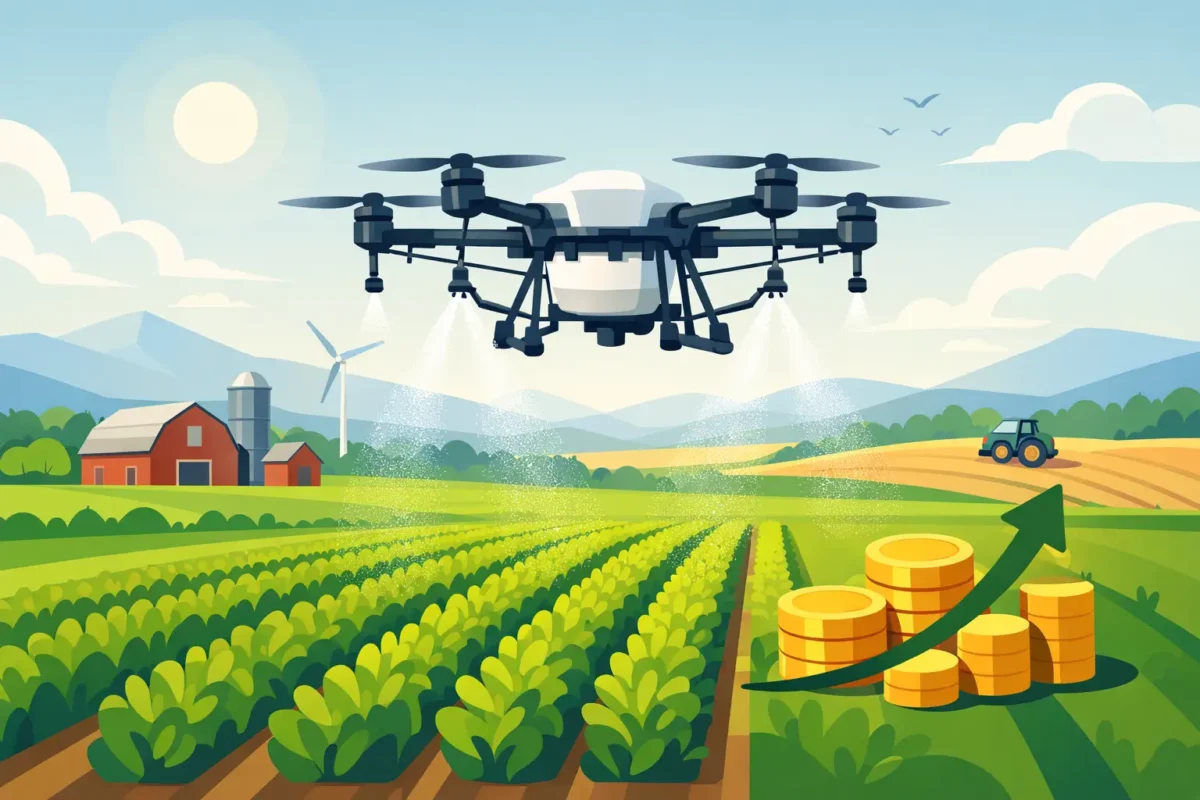
When a spray window opens, you do not get extra hours because labor is short or ground rigs are backed up. That is why the best crop spraying drone is not just the one with the biggest tank or the newest features. It is the one that helps you cover acres on time, apply product accurately, and keep your operation moving without adding unnecessary complexity.
For most commercial growers and ag service providers, the real buying question is simple: which drone gives the best return for the way you actually farm? That means looking at field size, crop type, terrain, product mix, refill workflow, battery cycle time, and how often you plan to use the platform for more than spraying. A drone that looks impressive on paper can still be the wrong fit if it slows down loading, adds avoidable downtime, or costs more than your acreage can justify.
What makes the best crop spraying drone
The best crop spraying drone earns its place by solving real field problems. It should help reduce labor pressure, cut overlap, improve placement, and handle uneven terrain better than ground equipment in situations where timing matters most.
Capacity matters, but it is not the only factor. A larger payload can improve productivity, yet it also needs to be matched with an efficient battery and charging setup, practical transport, and refill speed that keeps the aircraft working instead of waiting. If your workflow around the drone is weak, the platform will never perform to its potential.
Precision is just as important as capacity. Consistent altitude, stable flight, route planning, and obstacle sensing all affect application quality. In real farm conditions, tree lines, poles, irregular field edges, terraces, and wet ground are part of the job. A crop spraying drone should help the operator maintain accuracy under those conditions rather than forcing compromises.
Then there is versatility. Many buyers are no longer looking for a single-purpose machine. They want one platform that can spray, spread, and in some operations support mapping or field assessment. That broader use case changes the value equation fast.
Why DJI Agras stands out in this category
For buyers comparing agricultural UAV options, DJI Agras models are often the practical front-runners because they are built around commercial farm productivity, not hobby-style flight. The platform is designed for repeatable work, field planning, and consistent application rather than occasional use.
That matters when you are trying to cover real acreage. Features such as autonomous route execution, obstacle avoidance, and terrain following are not luxury add-ons. They directly affect how much area you can cover in a day and how confidently you can operate in varied field conditions. They also reduce operator fatigue, which is a real issue when repetitive manual flying is replaced by planned and repeatable missions.
DJI Agras systems also make sense for buyers who want one investment to do more than one job. Spraying is the main driver for many operations, but spreading capability can add value during seeding, fertilizer distribution, or other application work where precision and field access matter. If you are trying to justify equipment based on annual utilization, multi-use capacity is a strong advantage.
Choosing the right size for your operation
A lot of buyers start by asking for the biggest machine available. Sometimes that is the right move. Sometimes it is not.
If you manage large acreages, run commercial application services, or need to move quickly across multiple fields in short weather windows, a higher-capacity drone is usually the better investment. You can reduce refill frequency, improve throughput, and get more done with the same labor. In those cases, a larger DJI Agras setup often delivers stronger long-term value even if the upfront cost is higher.
If your acreage is moderate, your fields are fragmented, or you are entering ag drone operations for the first time, a smaller or mid-capacity system may make more sense. It can be easier to transport, easier to stage, and easier to integrate into an operation that is still building spray drone workflow. The best crop spraying drone for a 5,000-acre row crop operation is not automatically the best choice for a specialty grower or a farm with smaller blocks and tighter access.
The key is matching aircraft size to your actual daily work pattern, not your ideal scenario. A machine that fits your crew, trailer space, refill process, and battery management plan will usually outperform an oversized setup that creates friction every time it leaves the shop.
The real cost question is productivity per acre
Price matters. Every farm buyer knows that. But the smarter comparison is not purchase price alone. It is cost against productivity.
A crop spraying drone can lower labor demand, reduce waste from overlap, and help you treat areas that are difficult or costly to access with traditional equipment. In some cases, it can also reduce crop damage caused by driving equipment through the field. Those gains add up over a season, especially when labor is tight and timing affects yield.
Still, ROI depends on use. If the drone will only fly occasionally on limited acreage, payback may take longer. If it will be used across multiple crops, multiple application windows, or service work for neighboring farms, the economics improve quickly. That is why serious buyers should evaluate expected acres per week, seasonal use, and whether the drone will handle both spraying and spreading.
Support equipment also affects cost per acre. Batteries, chargers, battery hubs, generators or power planning, and staging tools are not side details. They are part of the system. An efficient support package keeps the drone in the air and protects the return on the aircraft itself.
Features that matter more than spec-sheet bragging
A good sales pitch can make every drone sound like the answer. What matters is whether the features improve work in the field.
Terrain following is a major one. If your land is not perfectly flat, constant-altitude operation helps maintain more consistent application and coverage. Obstacle sensing matters for practical safety and route confidence, especially around trees, utility poles, and irregular field boundaries.
Flight planning is another feature that pays off quickly. Planned routes reduce skipped areas and overlap, which helps save chemical and produce cleaner results. For operations trying to standardize work across multiple operators or repeated applications, automated route consistency is a real advantage.
Fast swaps and efficient power management also deserve more attention than they usually get. A drone with strong flight capability still loses value if your crew is standing around waiting on batteries or dealing with a clumsy refill process. The best crop spraying drone is part aircraft and part workflow machine.
When a spray drone is a better choice than a ground rig
A spray drone is not a total replacement for every existing method. It works best where it has a clear operational edge.
Wet ground is an obvious example. If field access is limited and a ground rig risks delay, rutting, or crop damage, a drone can keep the application on schedule. The same is true for fields with difficult terrain, irregular shapes, or sections that are inefficient to reach with larger equipment.
Drones also make sense for operations trying to do more with fewer people. One trained operator with the right support setup can cover work that would otherwise depend on more labor, more coordination, or more machine movement. That does not mean every acre should be sprayed by drone. It means a drone becomes especially valuable where timing, access, and precision affect the bottom line.
How to decide which drone is best for your farm
Start with acreage and application frequency. Then look at whether you need spraying only or both spraying and spreading. After that, think hard about workflow. How will you transport the unit? Where will you mix and refill? How will you manage batteries in the field? Those questions shape daily productivity more than many buyers expect.
It also helps to be honest about operator experience. Advanced systems deliver strong results, but the right purchase is one your team can run consistently and profitably. For some farms, that means stepping into a platform that is easy to standardize now and expand later.
If your goal is buying for output, not just ownership, DJI Agras platforms deserve serious attention. They are built for agricultural work, designed around precision application, and suited for farms that need practical efficiency instead of gadget appeal. For a price-conscious buyer comparing real farm value, that is where the conversation should be.
The best equipment decision is usually the one that removes a bottleneck before it costs you a season, and a well-matched crop spraying drone does exactly that.
