
Lates News From Refrigerant Gas Wholesale
Agricultural Spraying Drone for Farms
Apr
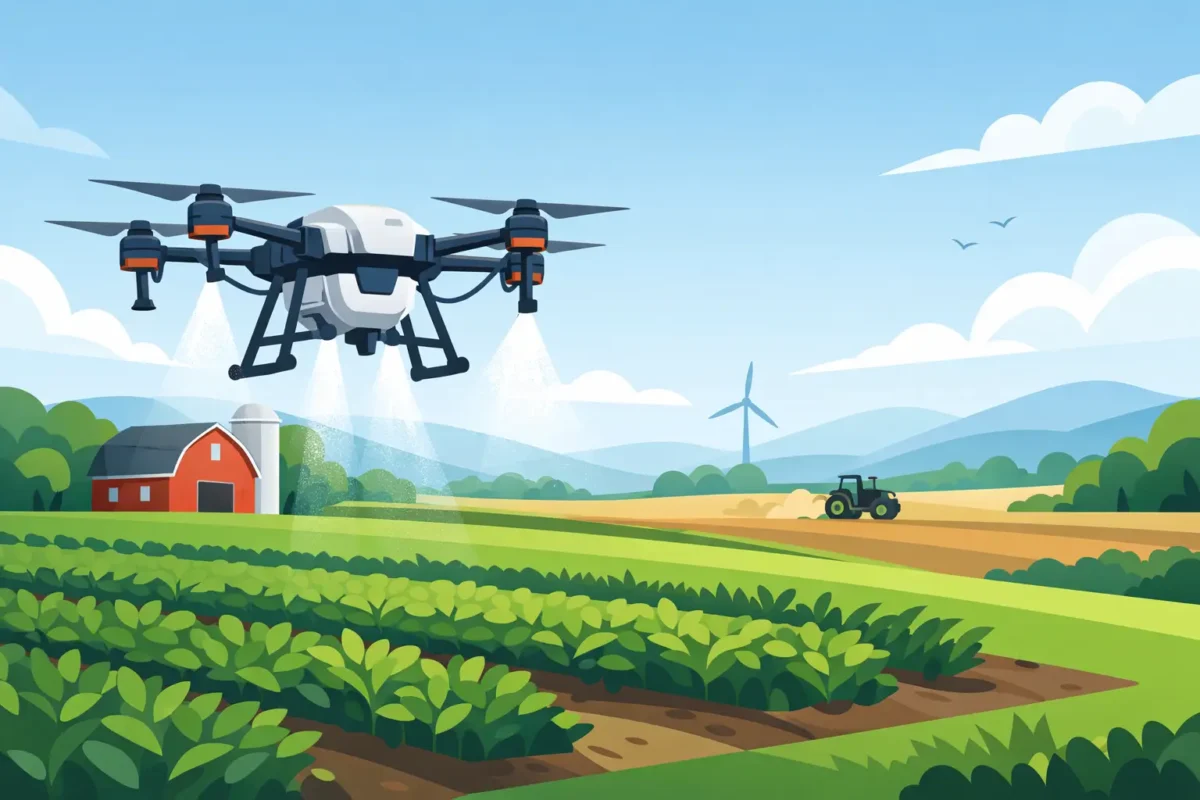
Labor is harder to find, input costs keep rising, and missed spray windows still cost money. That is exactly why an agricultural spraying drone for farms is moving from a nice-to-have tool to a serious equipment category for growers who need better coverage, tighter application control, and faster field operations.
A farm drone is not just a smaller version of a ground sprayer or an alternative to aerial application. It solves a different set of problems. It helps operators treat fields with more precision, work around wet ground, reduce overlap, and apply products where traditional equipment can lose time or cause crop damage. For many farms, that translates into cleaner applications, lower waste, and better use of labor.
Why an agricultural spraying drone for farms is getting attention
The biggest reason is simple – efficiency. A spraying drone can cover targeted areas quickly without sending heavy equipment across the field. That matters when crops are tall, rows are tight, or soil conditions make ground access difficult. Instead of waiting for fields to dry out or risking rutting, operators can keep moving.
The labor side matters just as much. Many farm businesses are trying to do more with fewer people. A drone does not replace every role on the farm, but it can reduce the number of labor hours tied up in application work, especially for spot treatments, smaller fields, irregular boundaries, or time-sensitive passes.
There is also a cost control angle. When application is more precise, waste goes down. Less overlap, more accurate route planning, and controlled flow rates can help reduce overapplication. That does not mean every farm will see the same savings, but it does mean the equipment can support a more disciplined input strategy.
Where a farm spraying drone makes the most sense
Not every operation gets the same value from drone spraying. The strongest fit is usually on farms that need flexibility. That includes operations managing multiple field shapes, areas with drainage issues, fields that are hard to reach with larger machines, or crops where minimizing plant damage is important.
A drone can also be a practical fit for custom application businesses and agribusiness managers handling several sites. When fields are spread out and response time matters, the ability to transport a compact system and get airborne quickly becomes a real operational advantage.
H3 crops and field conditions that benefit most
High-value crops, specialty crops, row crops with difficult access, and fields with soft ground often show the clearest benefit. Drones are also useful in late-season applications where driving equipment through the crop can cause avoidable damage. If your operation regularly deals with narrow timing windows, uneven terrain, or acres that are inefficient for larger machines, the value starts to become easier to measure.
What these drones actually improve
The sales pitch around ag drones often gets too broad. The better way to look at them is by the jobs they improve.
First, they improve timing. When disease pressure rises, weeds break through, or nutrition needs to be applied fast, getting into the field quickly matters. A drone can often be deployed faster than larger equipment and can work where tires should not.
Second, they improve consistency in targeted work. With programmed routes, height control, and automated flight patterns, operators can maintain more uniform coverage than with improvised manual methods. That is especially useful on awkward field edges, terraces, and smaller blocks that are easy to overwork with conventional equipment.
Third, they reduce wear on the field. A drone does not compact soil or crush plants. That sounds obvious, but on sensitive acreage, avoiding that physical impact has real value.
Features that matter when buying an agricultural spraying drone for farms
Not every specification matters equally in daily use. Buyers should focus on the features that affect productivity in the field, not just what looks impressive on a brochure.
Tank capacity and spreading capacity matter because they affect how often you stop to refill. More capacity usually means better productivity, but it also affects weight, transport, and battery demand. The right size depends on your acreage, field layout, and how often you need to move between sites.
Flight automation is another major factor. Route planning, autonomous operation, terrain following, and constant-altitude performance all make the equipment easier to use and more dependable during long workdays. Obstacle sensing is also valuable, especially around tree lines, poles, and irregular field edges.
Battery and charging workflow are often underestimated. On a busy spray day, uptime matters as much as aircraft performance. Fast charging, battery rotation, and reliable power management can make the difference between a productive setup and one that loses hours to delays.
H3 the value of multi-use capability
Many operators start with spraying but quickly look at spreading and mapping as well. A platform that can support multiple field tasks gives the farm more ways to justify the investment. If one piece of equipment can help with spraying, seeding, and other application work, its value goes beyond a single use case.
The trade-offs to think through before buying
A drone is a productivity tool, but it is not magic. The best buying decisions come from being realistic about both the upside and the limits.
Coverage speed depends on field conditions, payload, weather, and refill workflow. A drone may outperform expectations on targeted passes and difficult terrain, but it will not replace every large-acre broadcast application scenario. For some farms, it becomes a core application tool. For others, it works best as a complement to existing equipment.
Weather is another factor. Wind, rain, and local conditions affect flight quality and application accuracy. Operators need to plan around those limits just as they would with any application equipment.
There is also the learning curve. Modern agricultural drones are easier to operate than many first-time buyers expect, especially with automated flight planning. Still, setup, maintenance, battery management, and regulatory compliance take attention. The return is there, but it comes from using the equipment properly.
How to judge return on investment
The smartest way to evaluate an ag drone is not to ask whether it replaces everything else. Ask where it saves time, where it protects yield, and where it cuts unnecessary cost.
If a drone helps you spray at the right time instead of a day late, that has value. If it reduces crop damage from wheel tracks, that has value. If it lets one crew handle more acres with less wasted material, that has value too. On some farms, the payoff shows up in labor savings. On others, it shows up in better field access and more timely applications.
The strongest ROI cases usually combine several benefits at once: fewer labor hours, lower overlap, reduced product waste, and faster response in problem areas. That is why the equipment tends to appeal to commercial-minded operators who measure performance in acres covered, time saved, and input efficiency.
Buying the right system, not just the aircraft
A drone purchase should be treated like an equipment system purchase. The aircraft matters, but so do the batteries, chargers, hubs, controllers, RTK support, and replacement parts that keep it working through the season.
That is one reason many buyers prefer a direct online source focused on agricultural UAV equipment instead of general drone retail. The decision is not just about finding a drone. It is about getting a setup that matches real field use and supports spraying work without unnecessary add-ons.
If you are comparing options, keep the conversation practical. Ask how the unit fits your acreage, what refill and charging workflow looks like, how autonomous functions support your fields, and how easy it is to keep the system productive during peak season. Price matters, but operational fit matters more.
For farms trying to modernize without adding complexity for the sake of it, DJI Agras platforms have become a serious option because they are built around actual agricultural work. They are designed to help operators spray and spread more accurately, cover more ground with less wasted motion, and respond faster when field conditions change.
The real question is not whether farm drones are the future. It is whether your operation has enough spray pressure, labor strain, or application inefficiency right now to justify putting one to work this season.
