
Lates News From Refrigerant Gas Wholesale
How to Buy Agricultural Drone Online
Apr
When you decide to buy agricultural drone online, the real question is not just which model looks best on a product page. It is which drone will actually save time in the field, reduce chemical waste, and keep your operation moving during a tight spray window. For most growers and commercial operators, the right purchase comes down to payload, coverage, battery workflow, terrain handling, and how quickly the system starts paying for itself.
Why farmers buy agricultural drone online
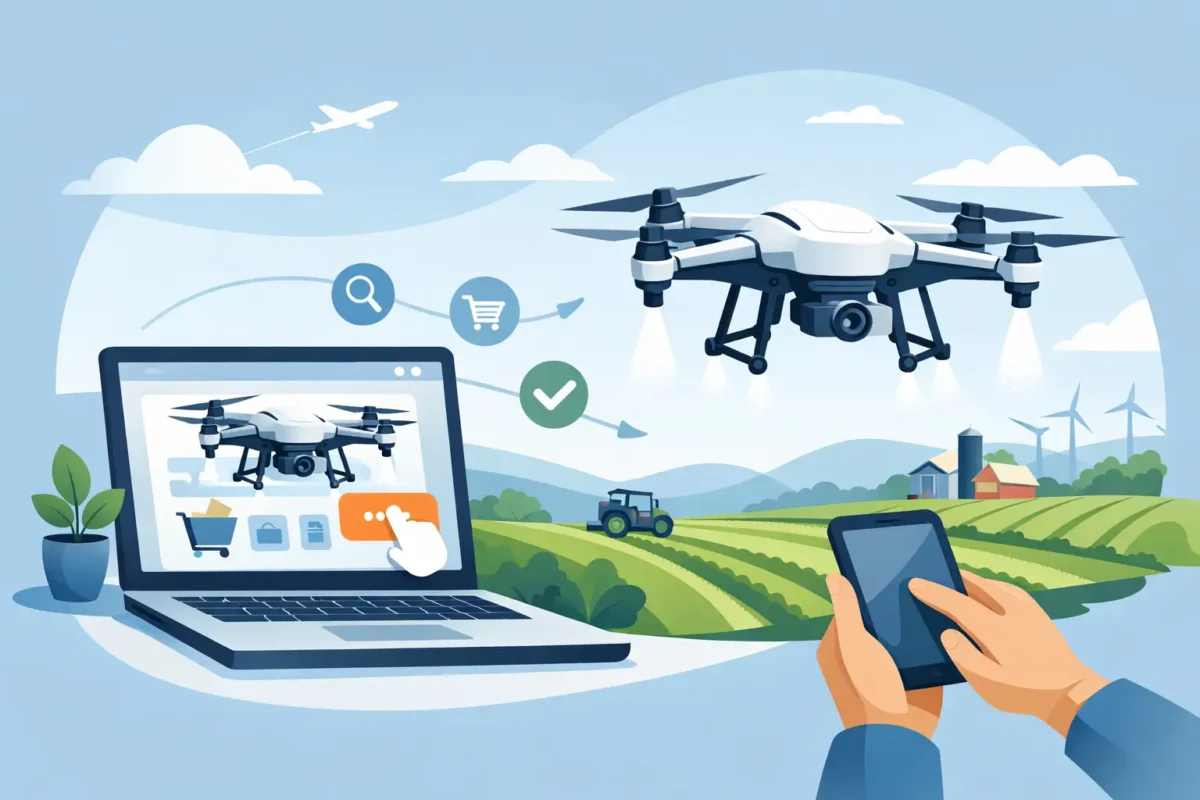
Online buying works well for agricultural drones because most serious buyers already know the problem they need to solve. They are trying to cover more acres with fewer people, apply product with better accuracy, and reduce overlap that wastes chemical and cuts into margin. Buying online gives you faster access to current models, accessories, and package options without waiting around for a local dealership to call back.
It also makes comparison easier. You can review spraying and spreading capacity, tank size, battery requirements, charger options, and support equipment in one place. That matters because an agricultural drone is not a toy purchase. It is an equipment decision tied directly to labor costs, field timing, and crop performance.
The other reason buyers prefer online ordering is price visibility. If you are managing costs closely, it helps to see what is included, what is optional, and where package pricing may offer better value than building a system piece by piece.
What to check before you buy agricultural drone online
The biggest mistake is shopping by headline specs alone. A larger tank sounds great, but if your battery charging setup cannot keep up, you may lose the productivity you expected. The same goes for range, speed, and advanced features that look good in a brochure but do not match the way your farm actually operates.
Start with your acreage and application type
Think about what the drone will do most often. If your main job is crop spraying, focus on spray tank capacity, flow rate, nozzle performance, and route efficiency. If you need spreading too, make sure the system is built for granular material and quick changeover between jobs.
A smaller operation may do well with a setup that is easier to transport, charge, and manage with one crew. A larger farm or custom application business may need higher payload capacity and more batteries to keep a full workday productive. The best buying decision usually comes from matching the drone to your daily workload, not chasing the biggest unit available.
Consider field conditions, not just field size
Flat open ground is one thing. Orchards, uneven terrain, tree lines, power poles, and irregular field edges are another. Features like obstacle sensing, constant-altitude flight, and planned autonomous routes become more valuable when the environment is less forgiving.
If your fields vary a lot, it pays to choose a drone that handles changing elevation and complicated boundaries without forcing the operator to constantly correct the route. That is where agricultural drones start earning their keep – not only in ideal conditions, but in real farm conditions.
Look at the full system
A productive drone program is more than the aircraft. You need batteries, charging equipment, and the right support accessories to avoid downtime. Many buyers focus on the drone first and only later realize that battery turnaround controls how many acres they can cover in a day.
That means the real purchase is a system. Aircraft, batteries, chargers, battery hubs, RTK support, and replacement parts all affect uptime. If one weak point slows the workflow, the entire investment underperforms.
Key features that matter most
Agricultural drone buying gets simpler when you focus on practical performance. A few features carry most of the value for commercial farm use.
Payload and tank capacity matter because they influence how often you stop to refill. Fewer refill cycles usually mean better field efficiency, especially on larger jobs. Autonomous flight planning matters because repeatable routes reduce missed areas and overlap. Precision application matters because better targeting can lower waste and improve coverage consistency.
Obstacle avoidance and terrain following are also important, but their value depends on your ground conditions. In open fields they may feel secondary. In uneven or obstructed areas they can make the difference between smooth operation and constant interruption.
Spreading capability is another point worth checking. Some buyers only think about liquid application at first, then later want to use the same platform for seeding or dry material. If multi-use flexibility is part of your plan, confirm that before ordering.
Cost is more than the cart price
The purchase price matters, but it is only one part of the decision. The better question is what the drone changes in your operation over one season and over several seasons.
If a drone cuts labor needs, reduces input waste, and lets you hit short application windows faster, the return can be substantial. For some farms, the biggest gain is not replacing every existing method. It is handling the acres that are hardest to reach on time, the spots where ground rigs cause crop damage, or the fields where labor is hardest to schedule.
That said, not every farm needs the largest or most advanced package. Overspending on capacity you will not use can stretch payback longer than necessary. The smart move is to buy enough drone to support your real workload with a little room to grow, not so much that your system becomes expensive idle capacity.
Buying online vs buying local
For many operators, online buying offers a more direct path. You can review specifications, compare package options, and order equipment without the extra markup or delays that sometimes come with traditional channels. That fits buyers who want straightforward purchasing and clear value.
Local buying may feel more familiar, especially if you like face-to-face sales. But that does not always mean better pricing or better product access. Online retail can be a stronger option when you already understand your needs and want to move quickly.
The trade-off is simple. Online buying rewards buyers who ask the right questions upfront. Local buying may offer more hand-holding, but it can come with less selection or slower purchasing. It depends on how confident you are in evaluating the full setup before you place the order.
Questions to ask before you place the order
Before you commit, make sure you know what is included in the package and what is not. A drone alone is rarely enough for commercial use. Ask whether batteries, chargers, spreading components, RTK gear, or support accessories are part of the purchase or sold separately.
You should also confirm replacement part availability. Agricultural work is demanding, and wear items matter. Fast access to motors, props, pumps, chargers, and related components can reduce downtime during the busiest periods.
It is also worth asking about the ordering process if pricing is inquiry-based on certain items. Some commercial drone packages are not sold with a simple fixed-price checkout, especially when configurations vary. That is normal, but you want clarity before you move forward.
A practical way to compare models
If you are sorting through options, compare them based on what affects your operation every day. How many acres can you reasonably cover in a normal work block? How often will you refill or swap batteries? How many people are needed to keep the workflow moving? How well does the drone fit your mix of spraying, spreading, and field conditions?
That approach keeps the decision grounded in productivity instead of hype. A model with stronger real-world throughput may be the better buy even if another has a more impressive spec in one category.
For buyers looking at DJI Agras equipment, that is usually the appeal. These drones are built around field productivity, repeatable application, and labor-saving automation rather than hobby use. If the goal is practical farm output, that positioning makes sense.
What a good online agricultural drone purchase looks like
A good purchase is not the one with the flashiest feature list. It is the one that fits your acres, your crew, your input program, and your budget. It arrives as part of a workable system, supports the jobs you actually need done, and helps you cover ground faster with less waste.
That is why experienced buyers think past the aircraft itself. They look at uptime, refill cycles, battery management, and whether the drone can handle both the easy acres and the difficult ones. They also keep an eye on affordability, because equipment should improve farm margins, not just add another payment.
If you are ready to modernize spraying or spreading, buying online can be the fastest way to move from research to action. The key is to buy with a field-first mindset. Pick the setup that works hard, fits your operation, and gives you more control when timing and efficiency matter most.
